
History
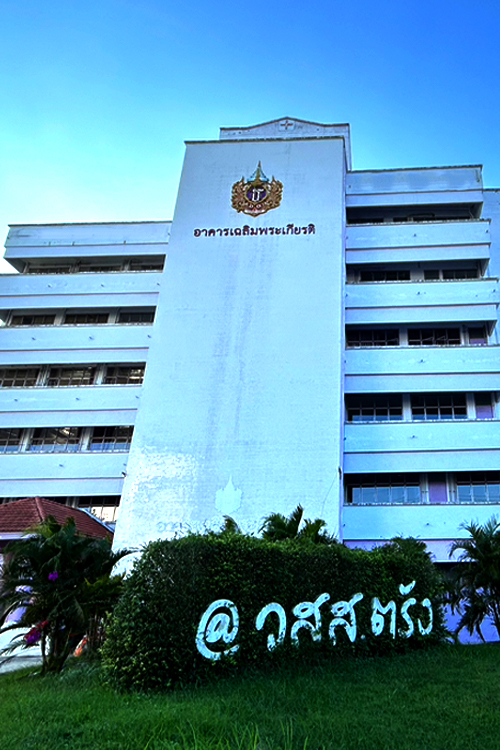
Sirindhorn College of Public Health, Trang Province
Sirindhorn College of Public Health, Trang Province, was established in 1989 based on the initiative of Mr. Chuan Leekpai during his tenure as Minister of Public Health. Approximately 96 rai of land in Thung Lan Sai Hak was designated as the college’s location. At that time, Dr. Narong Chayakul, the Provincial Public Health Doctor of Trang, reviewed the area and observed that a portion of it was wetland and another part was used for agriculture, with minimal impact on the community. He therefore supported the use of this land for the college’s establishment.
On February 29, 1993, the land use consideration committee approved the Ministry of Public Health’s request to use 78 rai, 1 ngan, 50.5 square wah of land for the construction of the college. The budget allocated was 165 million Baht, as a committed budget from 1992 to 1995.
Additionally, the college received support from the people of Khuan Thani sub-district, as well as government and private organizations, who donated land and money to build the road leading into the college.
To honor Her Royal Highness Princess Maha Chakri Sirindhorn on the occasion of her 3rd cycle birthday, H.E. Chuan Leekpai proposed that the Ministry of Public Health request the royal name “Sirindhorn” for the College of Public Health, Trang Province. —–This request was granted on May 11, 1992, making it the first College of Public Health to be graciously bestowed with a royal name.
In 2019, under the Boromarajonani Institute Act, the Boromarajonani Institute was established as a specialized higher education institution under the Ministry of Public Health. The organizational structure was arranged so that Sirindhorn College of Public Health, Trang Province, operates under the Faculty of Public Health and Allied Health Sciences.
Philosophy
Community-focused college, building people of virtue, leading with wisdom, and advancing health.
Vision
Leading Institutions for Community Health Education in ASEAN
Mission
- Produce graduates with quality, ethics, morality, and the potential for self-directed learning.
- Research, promote, and support research and innovation to create or develop knowledge and apply that knowledge for the benefit of societal development, gaining national and international recognition, and providing medical and public health services.
- Develop personnel and provide academic services to society, emphasizing collaboration with communities.
- Promote and preserve arts, culture, and local wisdom.
- Develop a modern management system under good governance principles